Prof Denis L.J. LafontaineWritten by: Dr. Anna Sherwood Posted: February 13, 2026 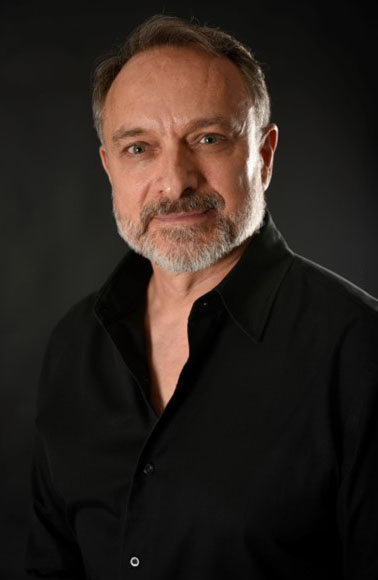 Prof. Denis L.J. Lafontaine is a Research Director with the Belgian Fund for Scientific Research and a Professor at the Université libre de Bruxelles. He obtained his MSc and PhD in Molecular Biology and Genetics from the University of Namur, Belgium, under the supervision of the late Prof. Jean Vandenhaute, followed by postdoctoral training with Prof. David Tollervey within the Gene Expression Programme at the European Molecular Biology Laboratory in Heidelberg, Germany, and at the Wellcome Trust Centre for Cell Biology at the University of Edinburgh, Scotland. Recruited in 2001, he established his group at the Institute of Molecular Biology and Medicine at the University of Brussels, where he has since built an internationally recognized research program on ribosome biogenesis and its links to human disease. The Lafontaine laboratory first made seminal contributions to understanding ribosome biogenesis in budding yeast. In 2010, the group pivoted toward human cells to uncover how ribosome production and nucleolar organization intersect with disease. As Denis describes his current focus, “We study ribosomes in eukaryotes, with a particular focus on diseases caused by ribosome biogenesis dysfunction. Cells must carefully control how many ribosomes they make: too few are observed in congenital ribosomopathies, while too many drive cancer.” A central question driving his work is why defects in a universal machine lead to tissue-specific pathologies. “Curiously, although ribosomes are essential in every cell, ribosomopathies affect only specific tissues, most notably the blood, brain, and bones — and, as we recently discovered, also the gut. Over the years, we have characterized examples of each of these diseases.” A major translational arm of the lab centers on Diamond-Blackfan anemia (DBA), a bone-marrow failure syndrome. Denis explains, “In the case of blood, we have concentrated on Diamond-Blackfan anemia (DBA), a bone marrow failure syndrome that leads to the loss of red blood cell production. DBA is caused by mutations in ribosomal proteins or assembly factors.” Through long-standing collaborations, this work has progressed from basic discovery to therapeutic development. “Together with colleagues at Ciemat in Madrid, Spain, we developed a gene replacement therapy for DBA, which recently received orphan drug designation in Europe (the equivalent of FDA status). Clinical trials are expected to begin soon — an exciting translational outcome of our fundamental research on ribosome biogenesis.” Beyond disease, the lab is deeply interested in the nucleolus as a biomolecular condensate and ribosome “factory”. Among his proudest scientific achievements are the lab’s large-scale identification of human ribosome assembly factors and their work linking specific ribosomal proteins to nucleolar structure and p53 regulation, directly connecting nucleolar biology to core cellular control pathways. Denis notes, “We are also fascinated by the ribosome’s ‘factory,’ the nucleolus, a biomolecular condensate with liquid-like behavior, undergoing fusion and fission events reminiscent of oil and vinegar in an emulsion.” Recent collaborative work has reshaped how the field views nucleolar organization. “In recent collaborations with colleagues at Princeton, we began decoding the blueprint of the nucleolus, showing that it is literally ‘built by the act of making a ribosome,’ but that it also regulates the process in return. Strikingly, by inhibiting a single step of ribosome assembly, we were able to turn the nucleolus upside down, completely reversing its internal organization.”
Collaboration has been a defining feature of Denis’s career. “Collaboration means everything to me — it is the fastest way to grow scientifically, to meet new people, and to make new friends.” Trained first as a yeast geneticist in Namur and later as an RNA biologist with David Tollervey at EMBL and in Edinburgh, he credits collaborative environments with enabling key scientific transitions. “It was only through collaboration that I was able to transition from yeast to human cell research … and later to disease modeling in animals.” Among many memorable experiences, he recalls a particularly vivid one in Asia that blended science and culture, starting in Tianjin, where he received incredible hospitality, and culminating in Tokyo where he gave University lectures and was introduced to everyday Japanese life –shared with colleagues over yakiniku and takoyaki–an experience he will always treasure.” Denis’s fascination with RNA began early. During his training, he worked on rRNA modification enzymes and witnessed the formative period when snoRNA guide functions were just beginning to be understood. “What truly excited me at the time was being part of the period when the guide function of snoRNAs was first discovered.” His path into RNA biology traces back to an ambitious master’s project that became a PhD quest. “I first stumbled into RNA biology during my master’s thesis project, where I set out to clone the gene responsible for the dimethylation of two adjacent adenosines at the end of yeast 18S rRNA.” The eventual success of cloning DIM1 left a lasting impression: “It took me several weeks just to sequence DIM1, but the thrill of discovery was unforgettable and cemented my passion for RNA biology.” Asked who most inspired him scientifically, Denis points without hesitation to his postdoctoral mentor. “Without a doubt, David Tollervey has been the greatest inspiration for me — a true mentor.” He highlights not only David’s scientific intuition but also his generosity and humanity: “David is not only a brilliant scientist, but also a truly exceptional individual — kind, caring, and with the rare gift of making excellence in science feel fun and light.” In parallel with his research, Dr. Lafontaine has invested heavily in community building and outreach, particularly in Europe. He has served on the steering committees of major COST (European Cooperation in Science and Technology) actions including Epitran and Translacore, co-organized multiple International Ribosome Synthesis Conferences, helped launch disease-focused networks on ribosomopathies, and contributed to the recent launch of a Marie Skłodowska-Curie Doctoral Network on RNA modification in cancer (Eureca). For him, these activities are inseparable from scientific progress: “Altogether, these outreach activities are essential to me, as they help raise awareness of RNA biology and its impact, while fostering a stronger, more connected scientific community.” Looking ahead, Denis emphasizes both the unpredictability of discovery and the growing medical relevance of RNA. “It is difficult to predict the next big thing, because many important discoveries arise by chance while pursuing something else.” Still, he sees clear momentum: “It has become increasingly clear that RNA is taking center stage in medicine, and this trend is only accelerating… the optimization of mRNA-based therapeutics, and the search for small-molecule inhibitors targeting key steps of RNA biogenesis.” Like many investigators, Denis identifies funding as a persistent challenge, particularly when it affects people in the lab. “The most difficult moments are when I have to let go of people I have worked very closely with for years because I can no longer support their salaries.” When reflecting on advice to younger scientists, Denis is characteristically humble. “I’m not sure I am the best person to give advice — I probably made many mistakes along the way.” Still, he encourages the next generation to trust themselves and their environments: “Follow your instincts, don’t overthink, and choose your location carefully… Never forget that we are privileged to make a living out of our passion.” Among Denis’s most meaningful publications is not only one that advanced the field, but one that also reflects his pride in the scientists trained in his laboratory. When asked about a favorite RNA journal article, he points to work led by a former postdoctoral fellow, highlighting both the science and the people behind it. “My favorite is a paper published in 2009 by Maxime Wéry (a recent awardee of The RNA Society) when he was a postdoc in my lab. At the time, using chromatin immunoprecipitation, Max developed an assay to monitor ribosomal co-transcriptional assembly. With this approach, we were able to follow the compaction of the SSU-processome, a large ribonucleoprotein particle corresponding to the maturing small subunit — best known as the ‘terminal balls’ on Miller chromatin spread Christmas trees.” Outside the lab, Denis is deeply attached to his Belgian roots and to art, architecture, and nature. He speaks with pride of Belgium’s cultural and scientific heritage, from surrealist painters Magritte and Delvaux, to Art Nouveau and the Solvay Councils, and recalls organizing the 2015 International Ribosome Synthesis Meeting at the Hôtel Métropole —the site of those historic gatherings— as a particularly symbolic moment. He is also a long-time participant in RNA Society meetings, with fond memories ranging from Banff to Madison to Kyoto, and a deeply personal experience at the 2024 Edinburgh meeting. Asked for a favorite RNA, his answer is immediate: “Ribosomal RNA, of course — is there really anything else? Lab website: https://www.lafontainelab.com/ |